
Platform
Services
Resources
Developers
Company

Healthtechs handle highly sensitive data and strict regulatory standards every day. We help your company grow with confidence by ensuring security and compliance at every stage of the development lifecycle.

Healthcare is now one of the most digitalized sectors — and also one of the most targeted. Electronic health records, telemedicine, interoperability, and integrations with health insurers create a dynamic yet highly vulnerable ecosystem.
Increasing use of AI in diagnostics and telemedicine
Growing data exchange between APIs and hospital systems
Stricter regulatory requirements focused on LGPD, HIPAA, and ISO 27001
Brazil leads the digital health sector in Latin America, with 64.8% of all healthtech startups
We combine technology, intelligence, and consulting to turn vulnerabilities into trust and continuous compliance.

Healthtechs work with highly sensitive information: electronic health records, clinical history, exams, prescriptions, biometrics, and financial data.
This information flows through multiple systems (EHR/EMR, hospital ERPs, lab APIs, telemedicine platforms, insurers, and medical devices).
A single vulnerability can expose an entire care journey, enable improper correlation of clinical records, or compromise critical integrations.
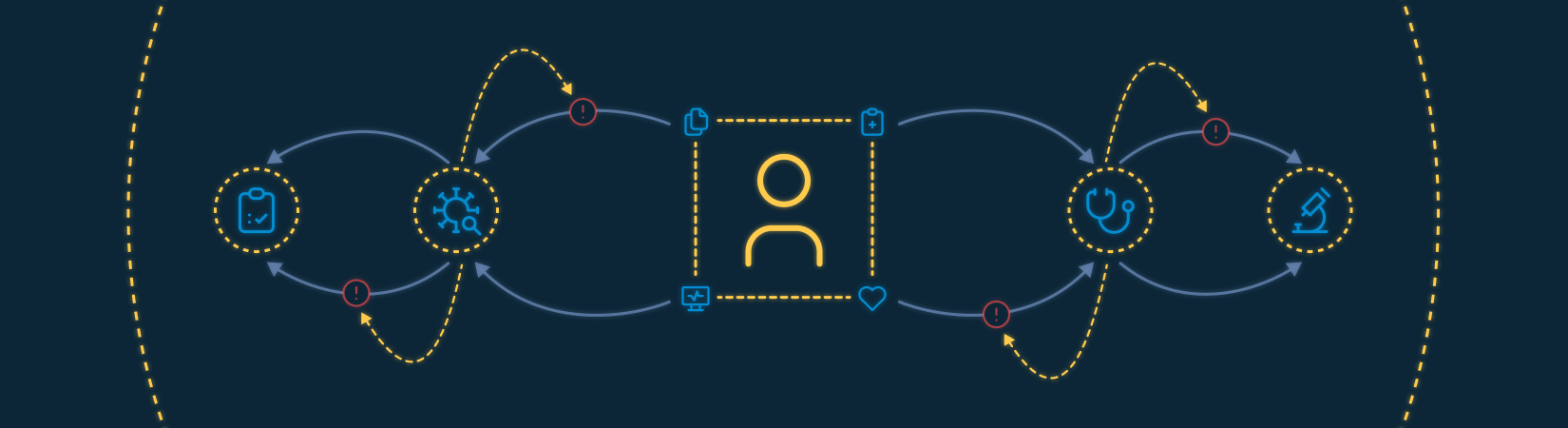
AppSec Manager

Centralizes findings from clinical apps, APIs, and ERPs; prioritizes by criticality; and maintains history and evidence for audits.
Vuln Intelligence
Enriches findings with global data (CVE, CWE) and contextual technical insights, highlighting what truly threatens patient data.
Pentest
Validates your attack surface: tests medical APIs, EMRs, telemedicine platforms, portals, and hospital integrations.

Fewer vulnerabilities exposing sensitive data

Prioritization of what affects privacy and regulatory compliance

Continuous evidence for LGPD, HIPAA, and internal audits
.svg)
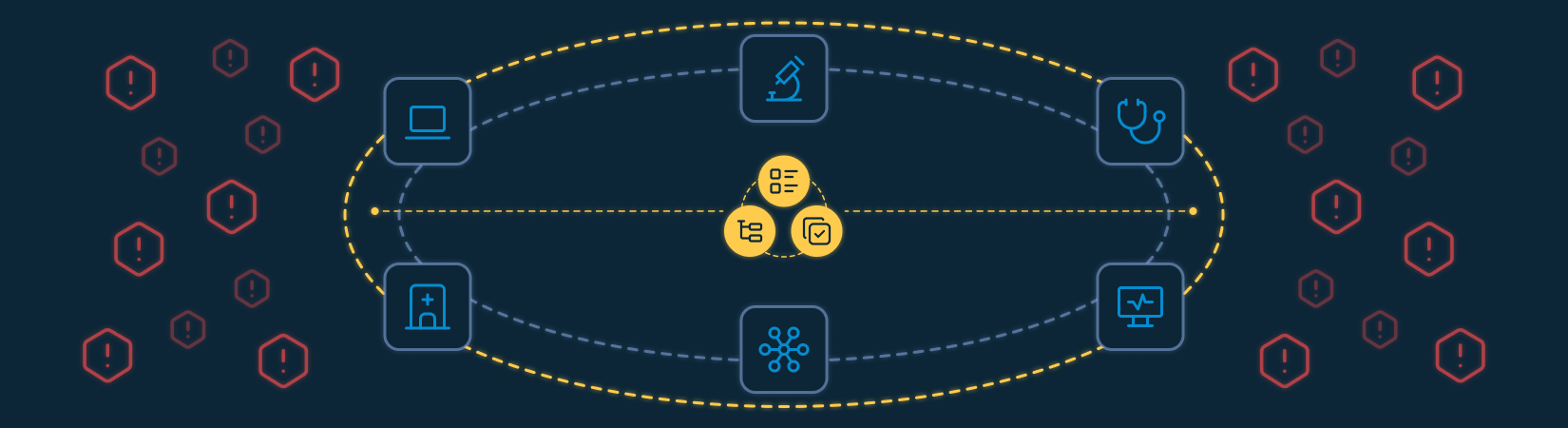
The healthcare ecosystem is highly interconnected: telemedicine, labs, insurers, hospitals, medical devices, digital prescription systems, and diagnostic platforms exchange clinical data in real time. This flow happens through FHIR/HL7 APIs, proprietary connectors, hospital ERP integrations, exam gateways, and EHR platforms.
Threat Modeling
Maps risks before implementation, analyzing clinical workflows, sensitive attributes, permissions between systems, and FHIR/HL7 integrations to identify attack scenarios specific to healthcare.
Supply Chain
Analyzes dependencies, libraries, containers, and SBOMs used in integrations. Detects vulnerable components in medical connectors, exam gateways, and partner SDKs.
Vendor Assessment
Evaluates suppliers under technical and regulatory criteria. Reviews clinical APIs, development practices, authentication mechanisms, and compliance with LGPD, HIPAA, ISO 27001, and PCI.

Risks identified before integrations go live

Reduced exposure from partners, external APIs, and SDKs

Continuous monitoring of the software supply chain and integration components

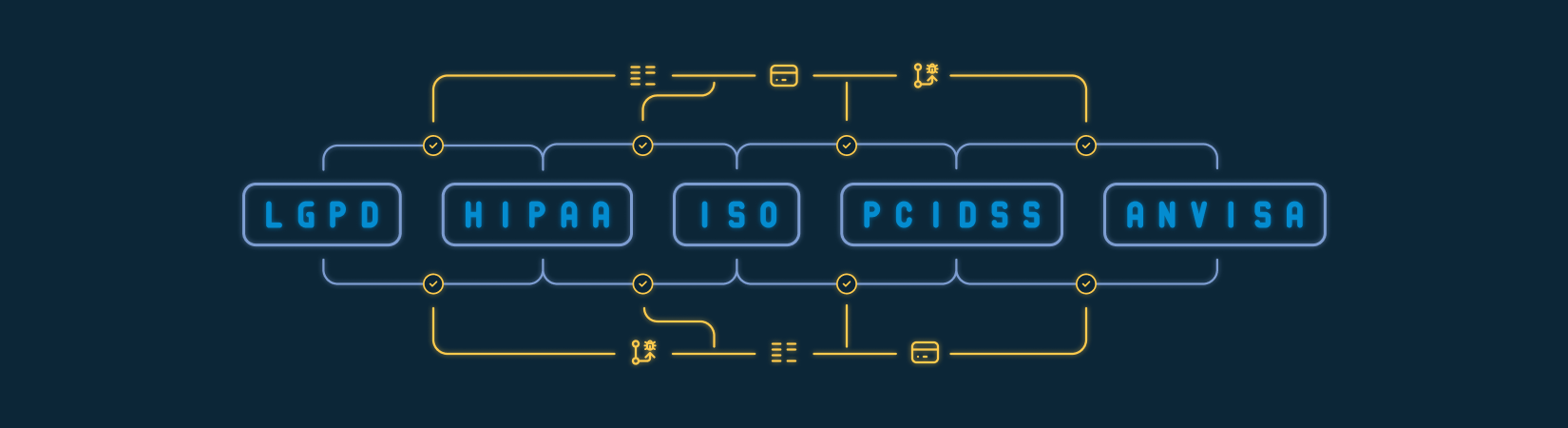
Healthcare companies handle extremely sensitive data — clinical, personal, financial, and operational. To operate safely, they must maintain ongoing adherence to regulations such as LGPD, HIPAA, ISO 27001, ANVISA RDCs, and PCI DSS when processing payments. This requires updated evidence, traceability of fixes, access control, event logs, policy reviews, and continuous monitoring.
Gap Analysis
Compares policies, clinical processes, technical controls, access flows, and data handling requirements with regulatory standards. Identifies exactly where the gaps are for LGPD, HIPAA, ISO, and PCI.
AppSec Manager
Centralizes evidence, fix history, vulnerability logs, timelines, and risk metrics. Supports audits with full traceability — without spreadsheets or manual data collection.
PCI Consulting
For healthtechs processing payments (subscriptions, digital clinics, plans, marketplaces), we guide PCI DSS compliance: scoping, controls, secure storage, and technical requirements.
.svg)
Faster audits with organized, traceable information
.svg)
Lower risk of regulatory non-compliance

Continuously documented and monitored technical controls

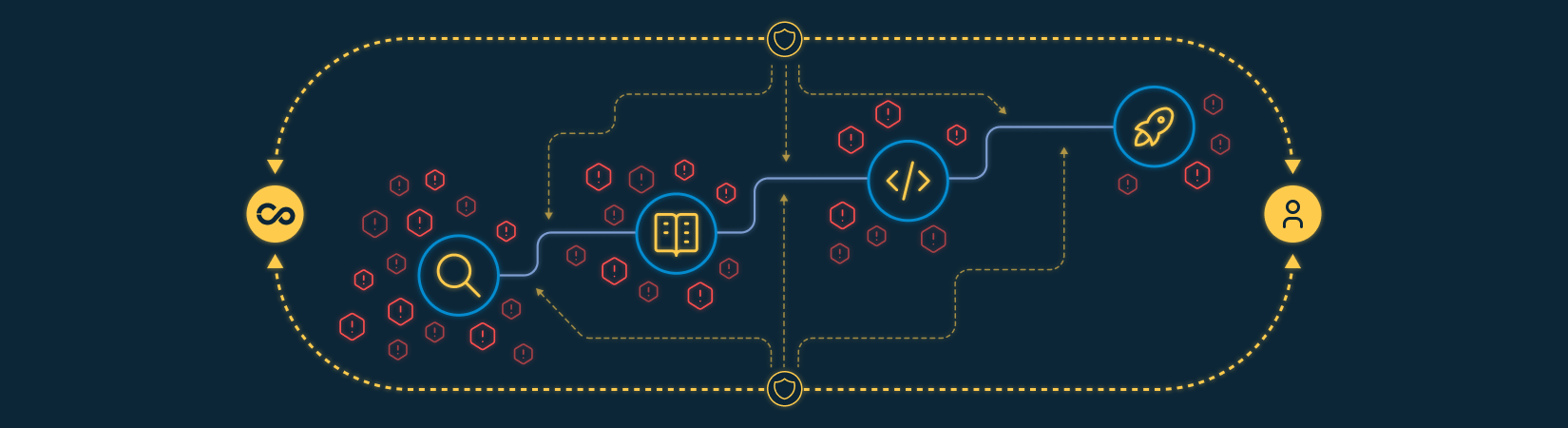
Healthtechs often operate with lean engineering and security teams responsible for critical systems: EMRs, telemedicine, FHIR/HL7 integrations, connected medical devices, and clinical management platforms. These environments require fast, technically sound decisions — often beyond the time or seniority available internally.
AppSec Journey
Maps knowledge gaps (API security, strong authentication, cryptography, input validation, FHIR/HL7 risks).
Builds personalized training paths, focusing on security applied to code and clinical workflows.
AppSec Squads
Conviso experts work as an extension of your engineering team:
Support technical decisions;
Review risks in new clinical features;
Guide secure fixes;
Help structure AppSec processes aligned to daily operations.

More mature teams capable of secure decision-making

Fewer recurring failures in APIs and clinical integrations

A more stable, predictable AppSec operation integrated with development
.svg)
AI models in healthcare operate on extremely sensitive data — imaging, diagnostics, vital signs, clinical notes, demographics, behavioral patterns. These pipelines typically involve ingestion, preprocessing, training, inference, and storage across multiple data sources.
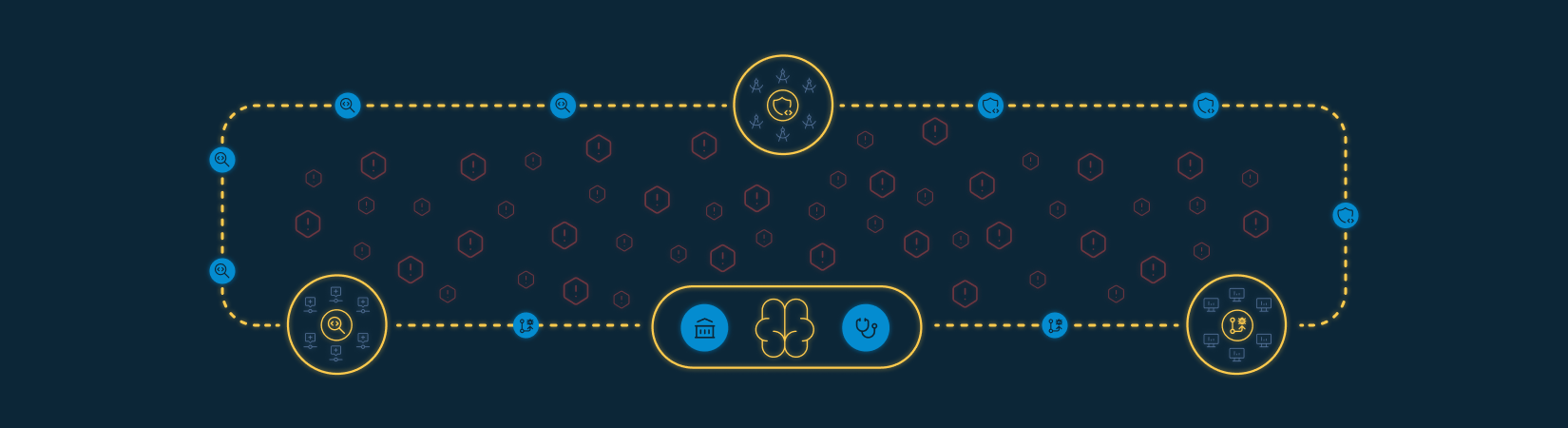
Threat Modeling
Maps risks from pipeline architecture:
Ingestion, preprocessing, clinical validations, FHIR/HL7 flows, classification/triage models, inference endpoints, and ERP integrations.
Identifies scenarios such as dataset manipulation, data leakage, and excessive permissions.
Pentest
Tests APIs and endpoints exposing AI models, checking:
Input validation;
Inference logic;
Improper data exposure;
Adversarial attack risks;
Manipulation of clinical results;
Security of training environments.
AppSec Manager
Centralizes all findings from AI pipeline tests, maintains risk metrics, fix history, and traceability — ensuring continuous improvement.

Security from architecture, not only at the model level

Reduced risks across the entire AI pipeline

Lower exposure to data leakage and adversarial manipulation

Healthtechs process multiple financial flows: platform subscriptions, telemedicine payments, patient–doctor transactions, recurring billing, medical marketplaces, and insurer integrations. These flows involve payment data, tokens, anti-fraud routines, gateways, and PSPs — all requiring PCI DSS compliance.
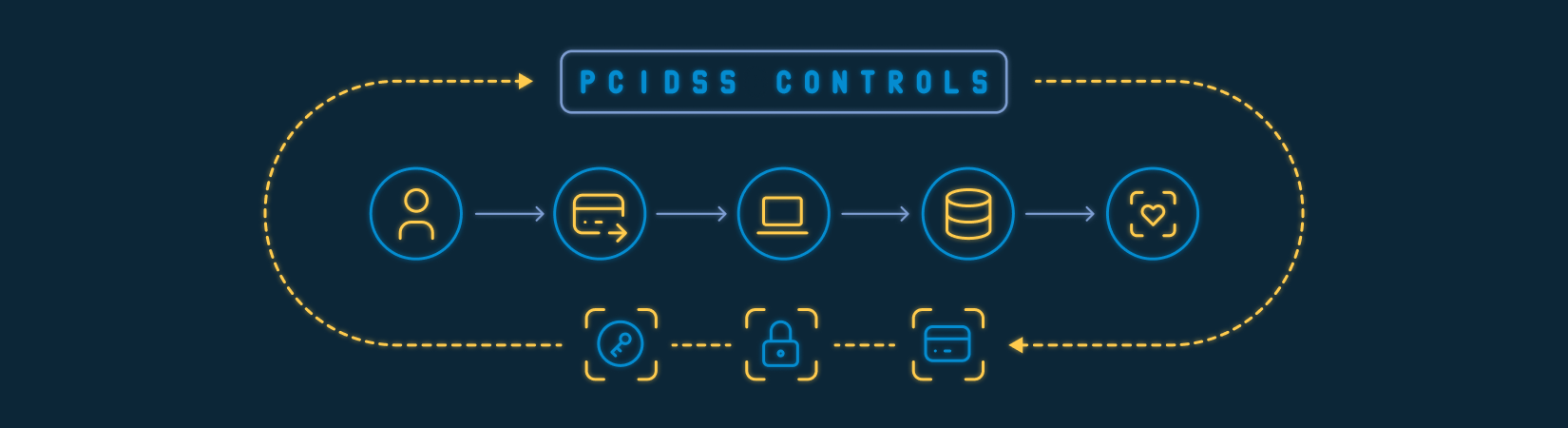
PCI Consulting
Evaluates the entire payment scope: apps, APIs, environments, processing flows, and integrations. Guides PCI DSS compliance on:
Environment segregation;
Encryption of sensitive data;
Tokenization;
Strong authentication;
Access control;
Logging and monitoring.
Vendor Assessment
Analyzes gateways, PSPs, integrators, and financial partners under technical and regulatory criteria.
Evaluates API security, authentication, data storage, and integration practices.
Gap Analysis
Identifies technical, operational, and policy gaps related to payment security.
Demonstrates exactly what needs to evolve to maintain compliance.

Continuous PCI DSS compliance, avoiding last-minute fixes
Reduced exposure to financial fraud in clinical flows
More predictable, traceable audits
Since 2008, we’ve helped healthcare and technology companies build secure applications and comply with the most demanding regulations. We combine AppSec, DevSecOps, and compliance expertise to protect data, patients, and reputation.

Expertise in sensitive data and regulated environments

PCI DSS certification authority and leading AppSec reference in Brazil

Specialized security and compliance teams

Dev-first approach, integrated into development workflows
Talk to our experts and discover how to evolve your security program without slowing down innovation.

